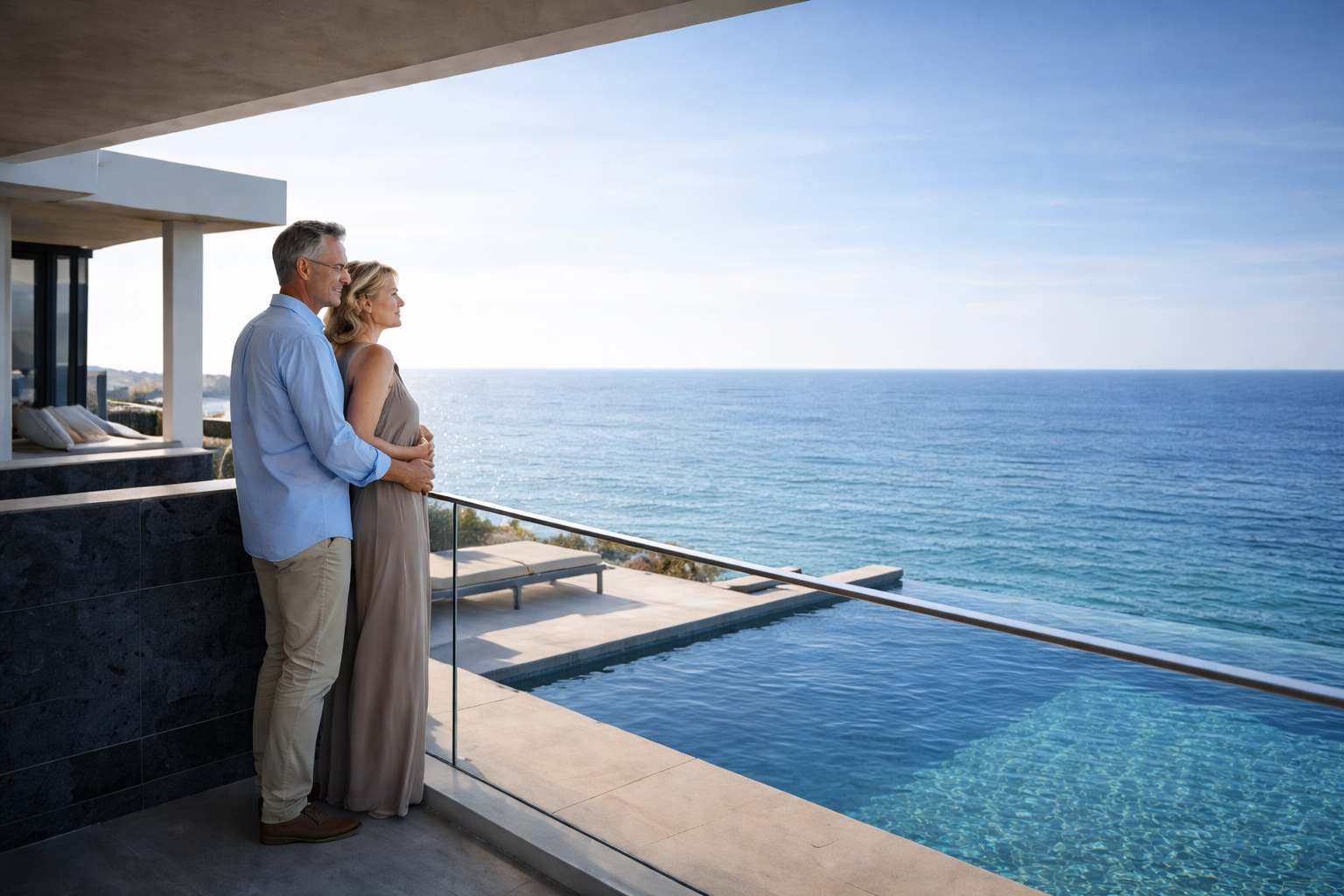
The Buying Journey Step by Step
Define Your Priorities
Every successful property search starts with clarity. Before you begin viewing, understand what matters most: location, property type, lifestyle, privacy, condition, rental potential, accessibility, outdoor space, or long-term value.
Set a Realistic Budget
The purchase price is only part of the full picture. Allow for additional transaction costs, mortgage costs, refurbishment, furnishing, or setup costs. A realistic budget helps you search, compare and negotiate with confidence.
Prepare the Practical Requirements
Obtain an NIE number, arrange a Spanish bank account where needed, prepare proof of funds or finance, and ensure basic documentation is ready before moving forward.
Search, Shortlist and View
Identify suitable opportunities and compare them properly. Local knowledge makes a real difference: surrounding area, access, building quality, community, orientation and long-term suitability are just as important as online appearance.
Agree Terms
Agree the main terms: price, timeline, furniture or contents, handover arrangements and the structure of the transaction. A written reservation or private agreement may be used before final completion.
Due Diligence and Preparation
Review property documentation, confirm ownership and ensure the transaction is progressing correctly. Clarity, communication and confidence that everything is moving as it should.
Completion Before the Notary
The public deed is signed before the notary and the balance paid. If a buyer cannot attend, a representative can be appointed by power of attorney.
After Completion
Taxes, land registry, utilities, insurance, community fees and other ownership formalities. Zanderfield helps ensure a smooth transition into ownership.
Frequently Asked Questions
How long does the buying process take in Gran Canaria?
The timeline varies depending on the property and the buyer's circumstances. In straightforward cases, the process from agreeing terms to completion can take between four and twelve weeks. Having your NIE number, bank account and proof of funds ready in advance helps avoid delays.
Do I need an NIE number to buy property in Spain?
Yes. The NIE (Número de Identidad de Extranjero) is the foreign identification number required for all property transactions in Spain. It is advisable to obtain this before making an offer so the process can move forward without delays.
What taxes do I pay when buying property in Gran Canaria?
For resale properties, buyers pay transfer tax (Impuesto de Transmisiones Patrimoniales). For new-build properties, IGIC (the Canary Islands equivalent of VAT) typically applies instead. Additional costs include notary fees, land registry fees and administrative costs. As a general guide, buyers allow around 10% on top of the purchase price for all transaction costs.
Can a non-resident buy property in Gran Canaria?
Yes. There are no restrictions on non-residents purchasing property in Spain or the Canary Islands. International buyers from both EU and non-EU countries regularly purchase in Gran Canaria. The main practical requirements are an NIE number and, in most cases, a Spanish bank account.
Do I need to be present in Gran Canaria to complete the purchase?
Not necessarily. If you cannot attend the notary signing in person, it is possible to appoint a representative using a power of attorney to complete the transaction on your behalf.
Do I need a lawyer to buy property in Gran Canaria?
No, the law does not require one. Zanderfield checks the land registry and all the papers for you before you pay a deposit: who owns the property, any debts on it, the licences and the community fees. The sale is then signed before a Spanish notary, who checks the deed. You are always free to use a lawyer of your own.
Can British citizens buy property in Gran Canaria after Brexit?
Yes. Buying a home in Spain does not depend on EU citizenship. British buyers need an NIE, a Spanish bank account and the same paperwork as any other foreign buyer. What changed is the time you may spend in Spain without a visa, which is a separate question from owning a home. Ask us and we will put you in touch with a specialist we trust.
What is the difference between ITP and IGIC in the Canary Islands?
ITP (Impuesto de Transmisiones Patrimoniales) is the transfer tax on a resale home, paid by the buyer to the Canary Islands tax office. IGIC (Impuesto General Indirecto Canario) is the Canary Islands sales tax, charged when you buy a new home from the developer, together with stamp duty (AJD). A home pays one or the other, never both. Check the current rates on the official page or ask us for an estimate for the home you want.
Can I get a mortgage in Spain as a non-resident?
Yes, Spanish banks lend to non-residents, usually for a smaller share of the price than for residents and with proof of income from your home country. The bank orders a valuation (tasación) from a valuation company approved by the Bank of Spain and the mortgage is signed at the notary with the purchase. Allow extra time for the bank's checks when you plan your purchase.
What are the ongoing costs of owning property in Gran Canaria?
Ongoing ownership costs typically include annual local property tax (IBI), community fees for shared buildings or complexes, utility bills, home insurance, and any tax obligations related to rental use or non-resident ownership. Your Zanderfield advisor can help you understand the full picture before you commit.
Ready to Start Your Search?
Whether you already have a specific property in mind or you are just beginning to explore your options, Zanderfield is here to help.